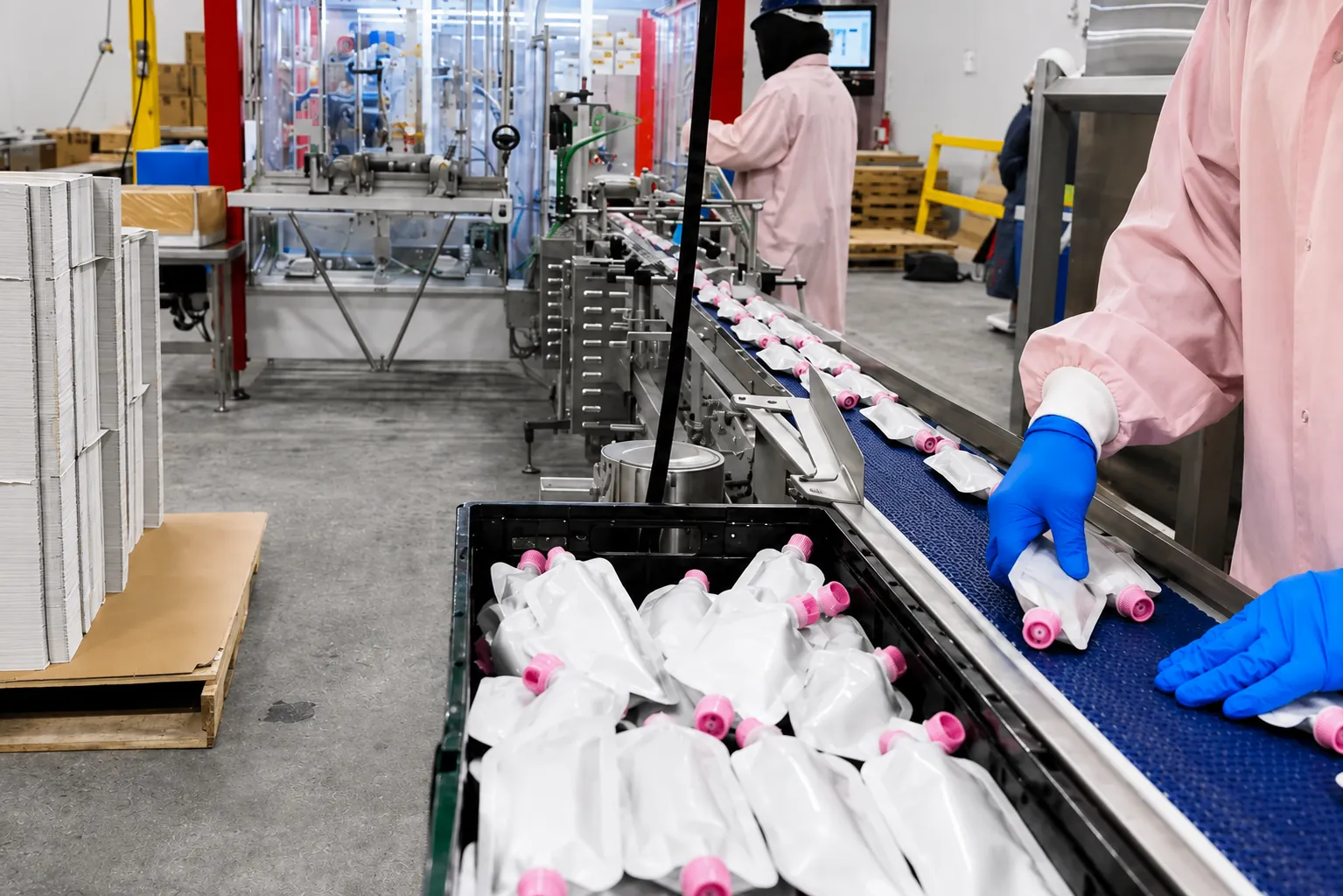
Worker sorting unbranded white squeeze pouches with pink caps on an APC production line

HPP & Co-Manufacturing Services

High-pressure processing, premium food manufacturing, post-process packaging, and logistics coordination within APC facilities

Most food brands eventually hit the same wall: a manufacturing partner that does not do HPP, an HPP provider that does not do manufacturing, and a cold chain that connects the two imperfectly—adding cost, risk, and time at every handoff. APC was built to eliminate that problem entirely.

American Pasteurization Company combines premium food manufacturing, high-pressure processing, post-process packaging, and logistics coordination at facilities in Milwaukee and Sacramento. More than 20 years of HPP operating experience informs every product assessment, production plan, and processing run.

The Integrated Model

Manufacturing and HPP under separate roofs is the default in this industry. It is also one of the most persistent sources of cold-chain risk, freight cost, and schedule delay for food and beverage brands.

At APC, products manufactured with us can be produced, packaged, high-pressure processed, finished, and prepared for distribution without leaving a controlled facility. There are no transfers to an outside HPP provider, no temperature breaks between production and pasteurization, and no logistics gap consuming refrigerated shelf life before the product reaches a retailer.

The result is faster movement through production, lower freight and cold-storage costs, and tighter quality control—not as an added service, but as a function of how APC is built.

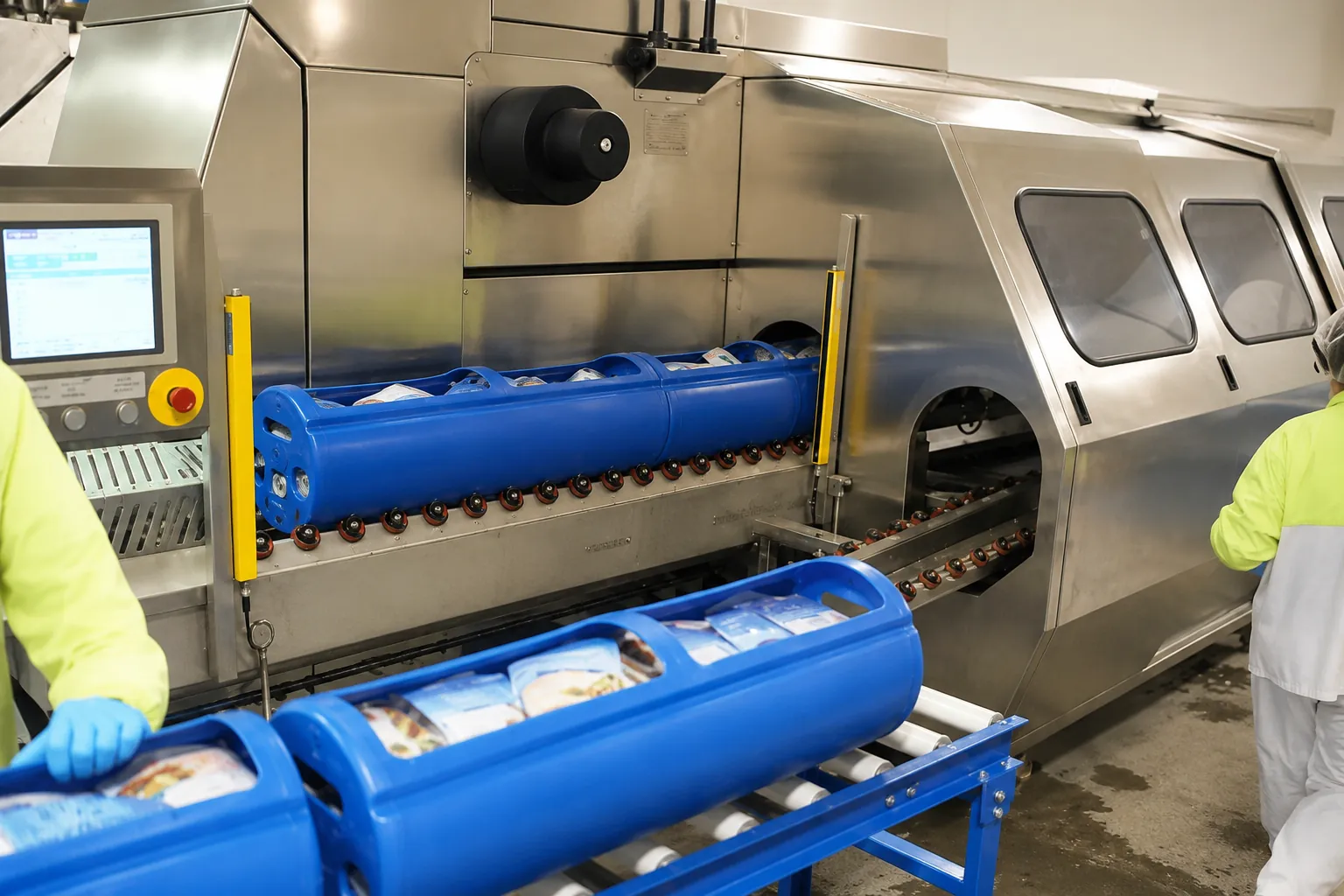
Blue HPP loading basket filled with packaged food entering high-pressure processing equipment at APC

Product Development and HPP Consulting

Most products need evaluation before they are ready for high-pressure processing. APC works with customers early enough to identify formulation, packaging, validation, regulatory, and production issues before they become commercial-scale problems.

Gloved APC employee adjusting unbranded pouches on packaging evaluation equipment

Services include:

  • HPP suitability assessment and category-fit review
  • Formulation development and clean-label reformulation
  • Packaging compatibility guidance and material referrals
  • HACCP integration and FDA or USDA regulatory coordination
  • Laboratory referrals for shelf life, validation, and inoculation studies
  • Innovation Center access for formulation work, pilot processing, sensory evaluation, and packaging testing

Whether a company is developing a new SKU or reformulating an established product, the objective is the same: reach commercial production with the product, package, process, and documentation aligned.

Visit the Innovation Center

Premium Food Manufacturing

APC’s Milwaukee and Sacramento facilities manufacture a range of refrigerated, ready-to-eat, specialty, and clean-label food products that will receive HPP after packaging.

Manufacturing programs may include:

  • Co-manufacturing built around the product’s formulation and process requirements
  • Flexible batch sizes for emerging brands and higher-volume production for established products
  • Ingredient handling for fresh, refrigerated, clean-label, and ready-to-eat formats
  • Full HACCP program integration for USDA-regulated products
  • Production, filling, and packaging formats compatible with the intended HPP process

APC reviews each product before accepting a production program. Product category alone is not enough; formulation, viscosity, particulates, packaging, regulatory status, volume, timing, and facility fit all matter.

Bulk Bagging

Products commonly considered for bulk bagging include soups, stews, curries, sauces, prepared proteins, sides, salads, grain dishes, pasta, and meal components for foodservice, institutional, or downstream-processing customers.

Representative examples include:

  • Soups and stews, including chunky vegetable, cream-based, lentil, beef, and chicken varieties
  • Curries, pasta sauces, gravies, and cooking bases
  • Prepared proteins and proteins in sauce
  • Mashed potatoes, roasted vegetables, stuffing, grains, and other prepared sides
  • Potato, pasta, grain, and bean-based salads
  • Risotto, pilafs, fried rice, paella, jambalaya, and other grain dishes
  • Meal-kit components, fillings, spreads, dips, and seasonal products

Squeeze Pouch Filling

Flexible squeeze pouches can be used for smooth or semi-smooth products when the formulation, fill level, pouch material, closure, and seal system are compatible with HPP.

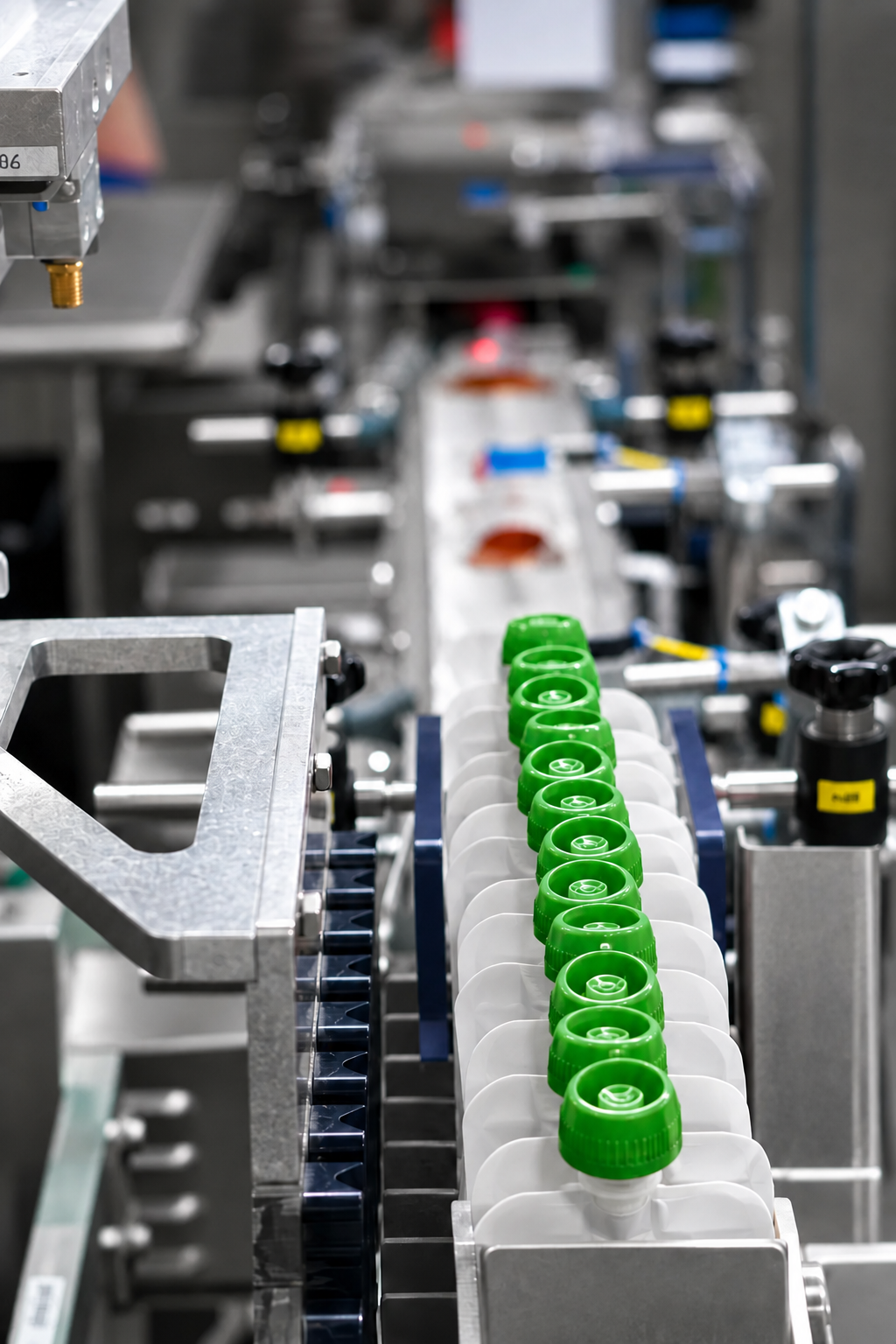
Unbranded white squeeze pouches with red caps moving upright through automated packaging equipment at APC

Representative examples include:

  • Fruit and vegetable purées and blended pouches
  • Smoothies, protein blends, and breakfast products
  • Puréed soups, chowders, and bisques
  • Sauces, dressings, dips, condiments, and refrigerated concentrates
  • Yogurt, kefir, chia, and other refrigerated pouch products
  • Seasonal purées, dessert fillings, and specialty formulations

Ready-to-Eat Meals and Sides

APC evaluates refrigerated meals, bowls, entrées, sides, proteins, and meal components that can be packaged before HPP and distributed through a controlled cold chain.

Representative examples include:

  • Single-serve entrées, pasta dishes, casseroles, and grain bowls
  • Prepared proteins, seafood dishes, and proteins in sauce
  • Potato, vegetable, grain, and rice sides
  • Soups, stews, wet salads, and specialty refrigerated items
  • Seasonal and holiday products

Review Product Categories and Formats

High-Pressure Processing

HPP—also known as cold pasteurization—uses ultra-high hydrostatic pressure, up to 87,000 psi, to inactivate harmful pathogens including Listeria, E. coli, and Salmonella without sustained heat or chemical preservatives.

Because APC’s HPP systems are co-located with its manufacturing operations, products made at APC can be pasteurized within hours of production. That proximity matters. It reduces temperature exposure, minimizes handling, and protects the refrigerated shelf life the product is expected to deliver.

Worker wearing purple gloves loading vacuum-sealed protein packages into a blue HPP basket at APC

Depending on the product and its validated process, HPP can provide:

  • APC employee monitoring process controls beside packaging equipment
    5-log (99.999%) reduction of specified target pathogens
  • Blue HPP loading baskets moving through stainless-steel high-pressure processing equipment at APC
    Refrigerated shelf-life extension from days to weeks or months
  • Unbranded yellow, green, and red pouch variants arranged for formulation review
    Clean-label formulations with reduced or eliminated synthetic preservatives
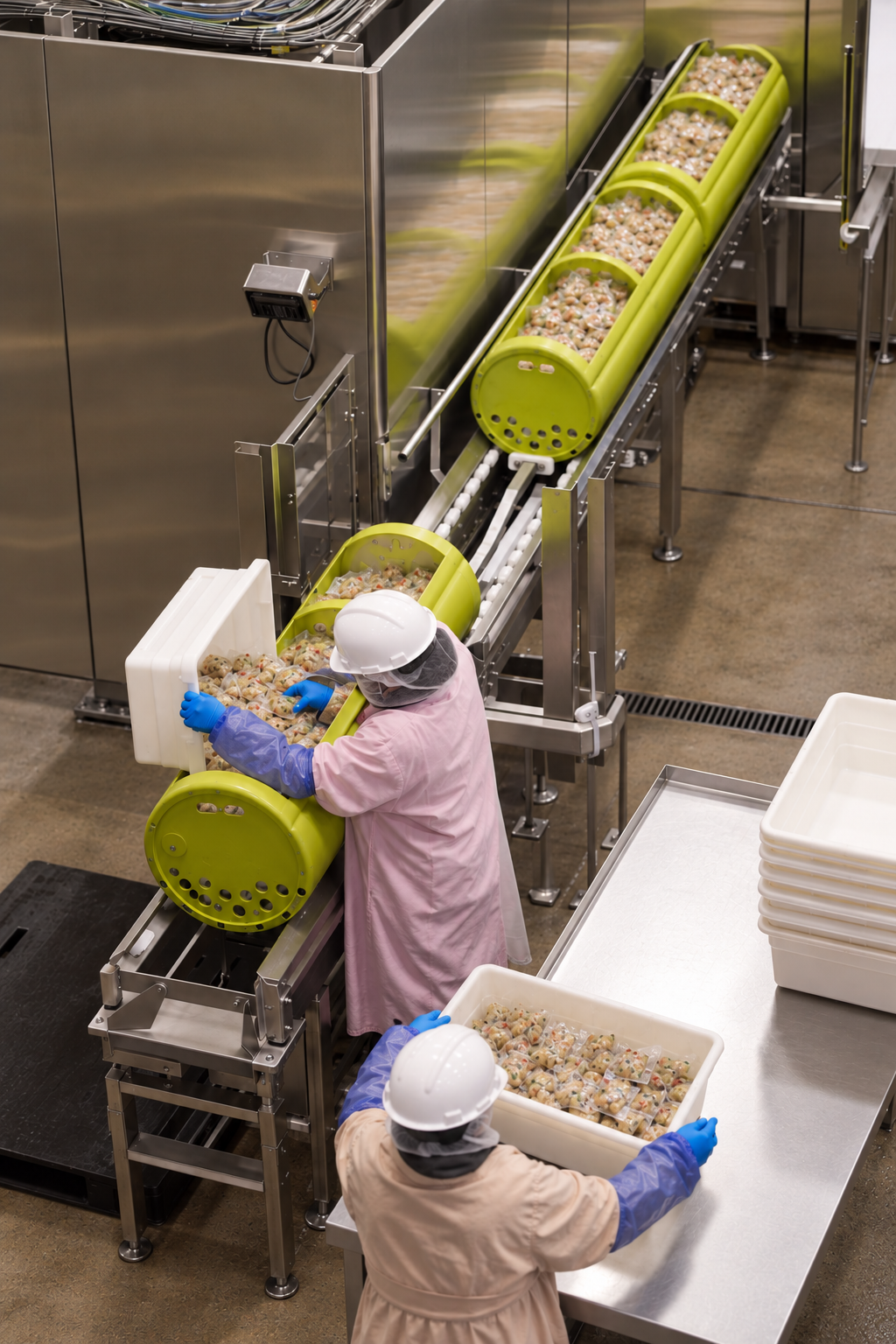
  • APC employees loading unpackaged food into HPP baskets on a processing line
    Better preservation of taste, texture, color, vitamins, minerals, and enzymes than sustained heat processing

APC was the first company in the United States to offer HPP on a commercial tolling basis. We have processed thousands of SKUs across North America. That depth of experience directly affects the guidance we can provide when a product presents a formulation, packaging, microbial, or production challenge without an obvious answer.

HPP is available on a per-pound tolling basis, allowing companies to use commercial HPP without purchasing equipment, building specialized infrastructure, or staffing an internal HPP operation.

See how HPP reduces food waste and environmental impact

How HPP Works at APC

Commercial HPP begins before the product reaches the pressure vessel. APC reviews the product and process together so that formulation, packaging, validation, food-safety documentation, and downstream handling are addressed in the correct order.

The process may include:

  • Product assessment for HPP suitability and sensory impact
  • Packaging and seal review for pressure and water exposure
  • Coordination with accredited laboratories for shelf life, validation, or inoculation studies
  • Definition of pressure, hold time, temperature, and other HPP process parameters
  • HACCP and production-documentation integration
  • Planning for post-HPP assembly, storage, and refrigerated distribution

HPP Packaging Requirements

HPP is performed after the product is sealed. The package must tolerate pressure, water exposure, closure stress, label behavior, and post-process handling without leaking, rupturing, or losing its intended function.

Packaging commonly considered for HPP includes:

  • Unbranded white flexible squeeze pouches with threaded pink caps moving through APC packaging equipment
    Flexible plastic pouches and high-barrier films
  • Vacuum-sealed meatballs in tomato sauce packaged for high-pressure processing
    Vacuum packaging
  • Plain corrugated cardboard cartons moving along a metal roller conveyor on an APC packaging line
    Plastic bottles with threaded caps
  • Rows of brightly colored unbranded squeeze pouches with white caps arranged in white production trays at an APC food manufacturing facility
    Selected plastic cups, tubs, trays, and rigid containers with adequate flex
  • Unbranded flexible pouches moving along a conveyor through automated processing equipment at an APC food production facility
    Selected induction-sealed and modified-atmosphere formats

Glass, cardboard, paper, styrofoam, metal cans, brittle rigid plastics, and weakly sealed packages are generally poor fits. Labels must tolerate water exposure or be applied after HPP.

Packaging should be tested before commercial production. A seal or material failure identified during pilot work is far less expensive than the same failure discovered after a production commitment.

Post-HPP Processing and Assembly

Production does not end at pasteurization. APC can complete downstream work so the product is ready for retail, foodservice, cold storage, or distribution before it leaves the facility.

Post-HPP services include:

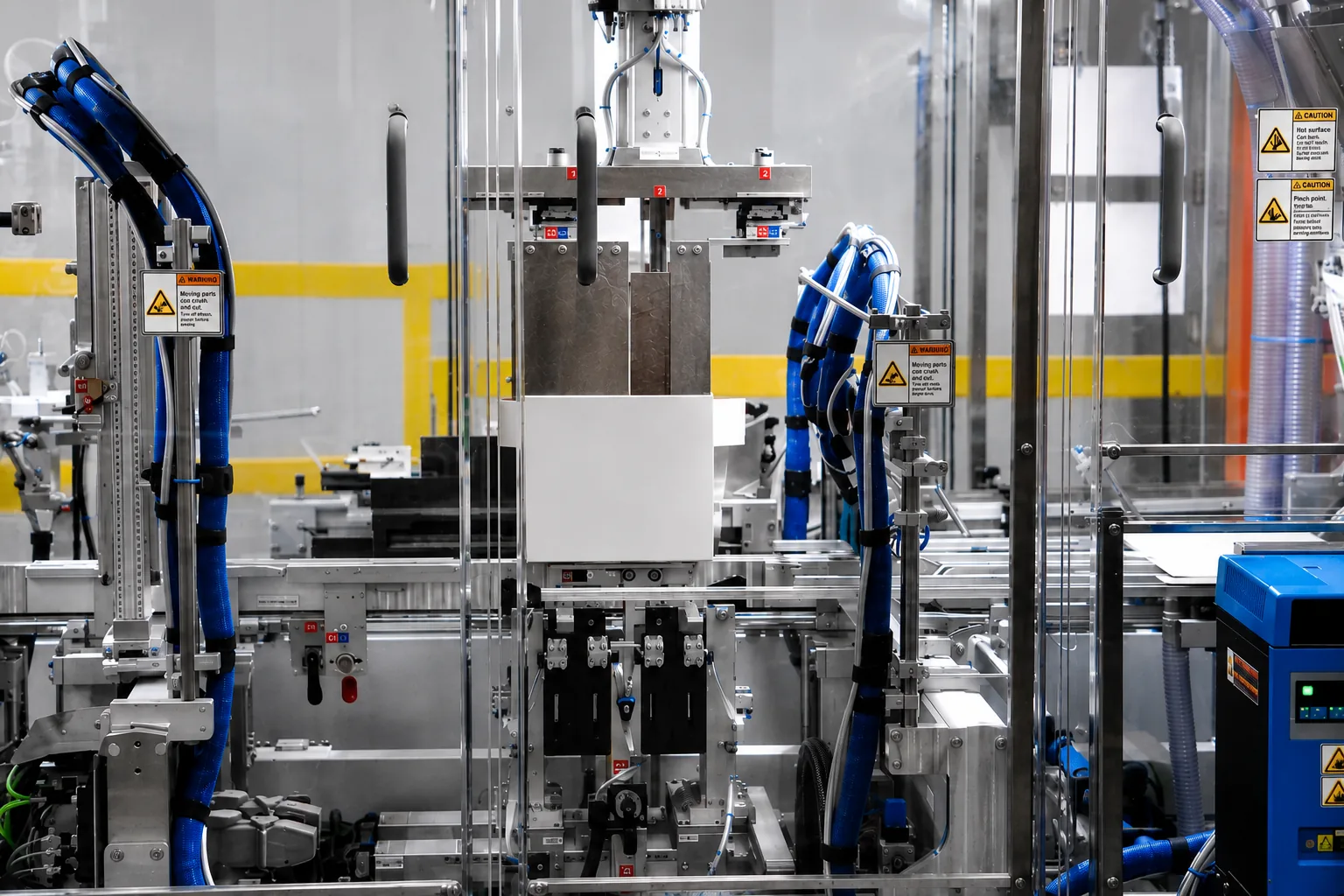
Brown cardboard cartons moving through automated packaging equipment on an APC production line
  • Inkjet date coding and barcode application
  • Package inspection and metal detection
  • Export certification and documentation support
  • Shrink sleeving, lidding, and tamper-band application
  • Box erecting, cartoning, palletizing, and pack-off
  • Custom assembly for retail- and foodservice-ready SKUs

These are not incidental capabilities. For brands managing tight production or launch schedules, having coding, inspection, assembly, and pack-off in the same facility as manufacturing and HPP removes a separate scheduling dependency that can otherwise delay release and distribution.

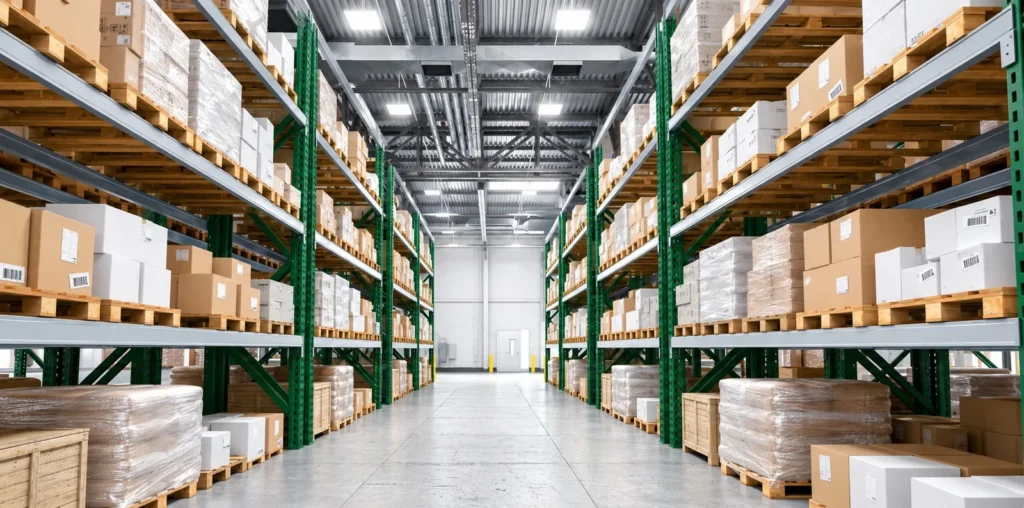
Warehouse storage aisle with tall pallet racks and stacked inventory

Cold-Chain and Logistics Coordination

HPP-treated products require unbroken refrigeration from processing through delivery. APC works with customers and their logistics providers to coordinate:

  • Cold-storage referrals
  • Refrigerated freight for domestic and export shipments
  • Expedited freight when timing is critical
  • Shipping and receiving for inbound raw materials and outbound finished goods

All deliveries to APC facilities must be scheduled in advance.

Why Brands Choose APC

The operational case for APC comes down to consolidation. Every handoff in a refrigerated food supply chain is a point of potential failure—temperature excursion, scheduling delay, communication breakdown, freight disruption, or quality inconsistency. Reducing handoffs reduces the number of failure points.

APC also brings:

Facilities

Milwaukee Production Plant

2880 North 112th Street, Building E
Milwaukee, WI 53222

Sacramento Production Plant

2335 Del Monte Street
West Sacramento, CA 95691
Plain corrugated cardboard boxes moving along a metal roller conveyor at APC

Discuss Your Product and Production Requirements

Include the product type, package format, current stage, estimated volume, timing, and whether the project requires manufacturing, HPP, packaging, product-development, or logistics support.