
FAQ
High Pressure Processing (HPP) is a non-thermal food safety method that uses ultra-high water pressure to eliminate harmful microbes and extend shelf life without heat or preservatives.
Browse FAQ Topics →
About APC
For more than 20 years, American Pasteurization Company (APC) has been a leader in HPP innovation, delivering clean-label food preservation solutions to food and beverage brands across the U.S. and Canada.
Our expertise in high pressure processing helps manufacturers deliver products that are fresher, safer, and longer-lasting. APC also brings deep experience in premium product manufacturing.
Start here with answers to our most common HPP questions, or reach out if you don’t see yours listed.
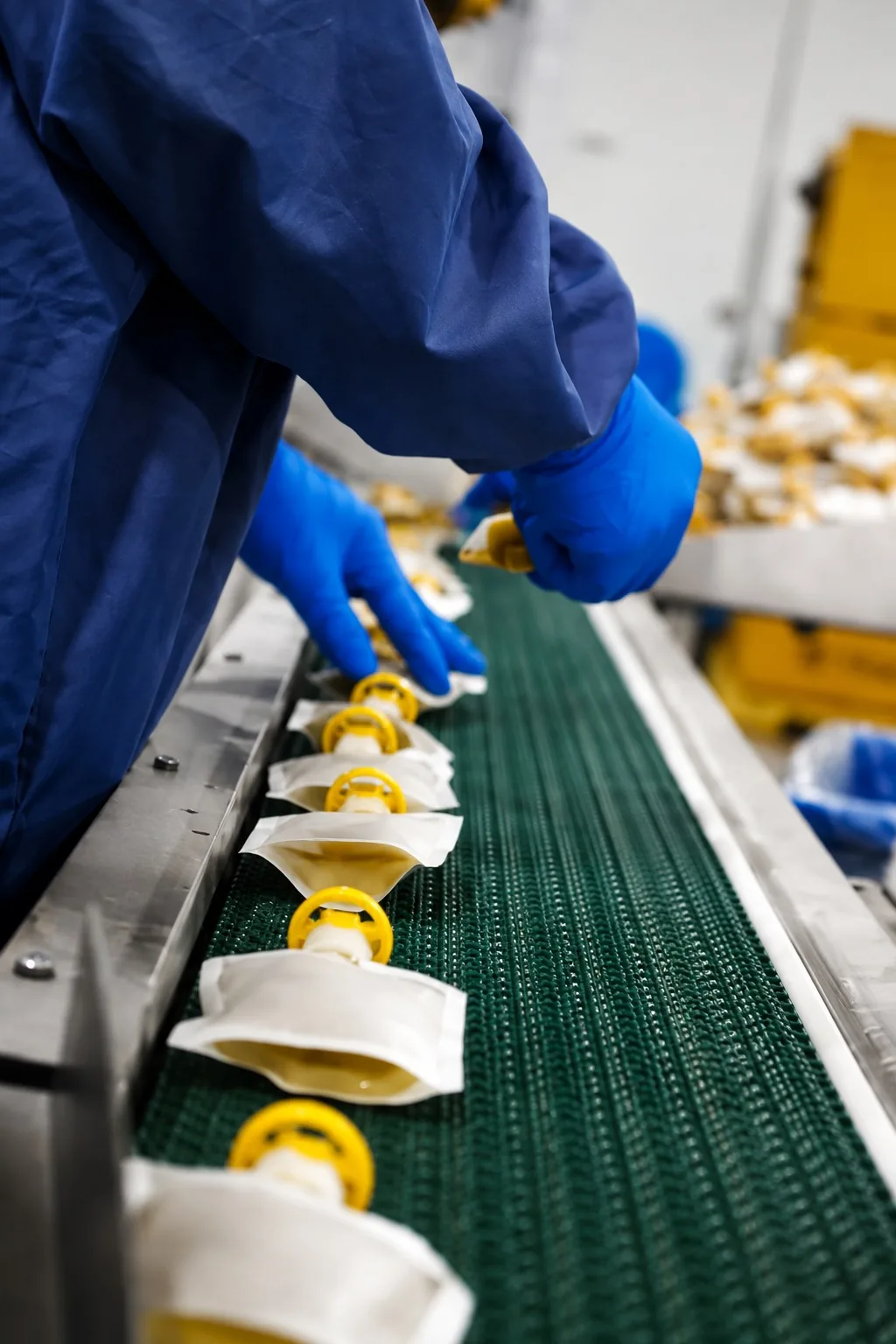
High-Pressure Processing (HPP), also known as high-pressure pasteurization, is a non-thermal food preservation method that uses extremely high levels of hydrostatic (water-based) pressure to inactivate harmful bacteria, molds, yeasts, and other microorganisms in food and beverages. Unlike traditional pasteurization methods that rely on heat, HPP preserves the integrity of the product while ensuring food safety and extending shelf life.
In the HPP process, prepackaged food or beverages are placed in a specialized chamber filled with cold water. The chamber applies pressure up to 87,000 psi, equivalent to six times the pressure found at the deepest parts of the ocean. This intense pressure disrupts the cellular structure of pathogens and spoilage organisms, rendering them inactive while maintaining the product’s taste, texture, color, and nutritional value.
Manufacturers increasingly turn to HPP for several benefits:
Extended shelf life – HPP extends product shelf life from as little as a few days up to several months, increasing product availability. While every product is unique and must undergo testing to determine an exact shelf life, most products will see a shelf-life increase of at least 5 times what the product would have without undergoing the HPP process.
Enhanced food safety – HPP destroys harmful pathogens found in food that make people sick, including E. coli, Salmonella, and Listeria, helping to prevent foodborne illnesses and costly recalls. Inactivating these microorganisms also keeps products from spoiling prematurely.
Improved product quality – HPP helps maintain the sensory attributes of food, including taste, texture, color, and nutritional value, far better than high-heat pasteurization or the use of chemical preservatives. Unlike ultra-high heat processes, HPP minimizes nutrient loss, preserving the vitamins, minerals, and enzymes that are often degraded by thermal methods.
Clean ingredient label – Using HPP typically eliminates the need for chemical preservatives in products. While each product varies and must take into consideration properties such as the product’s pH, HPP is effective at destroying spoilage organisms that make foods and beverages go bad quickly.
Reduction in food waste – Because HPP preserves fresh foods and beverages that would otherwise have a very limited shelf life, HPP prevents these products from needing to be thrown out after only a few days. This keeps large volumes of product out of landfills.
Lower impact on environment – Applying HPP to products requires significantly less energy than using heat pasteurization. It also uses less water, and the water can often be reused again and again.
For more on the HPP process and its applications, contact us today.
HPP works across a wide range of food and beverage categories.
Certain foods and beverages are not well-suited for HPP due to their moisture content, pH level, fat composition, or physical structure.
For products that don’t meet HPP requirements, alternative preservation methods, such as thermal pasteurization or formulation adjustments (e.g., increasing acidity), may be more effective.
No. HPP does not work on frozen products. For HPP to be effective, products must be fully thawed and held at refrigerated temperatures before processing.
Water content and water activity (Aw) both involve moisture, but each plays a different role in determining HPP effectiveness.
Definition: The total amount of water present in a product, expressed as a percentage of its weight.
Relevance to HPP: Water content does not directly influence HPP’s ability to inactivate microorganisms. Even products with high water content may not be ideal for HPP if the water is not readily available for microbial activity.
Definition: A measure of the availability of free, unbound water in a product for microbial growth. It is expressed as a value between 0 (completely dry) and 1 (pure water).
Relevance to HPP:
Need help evaluating your product? Contact the experts at APC to determine HPP suitability.
HPP is not a sterilization process. It does not eliminate all microorganisms, such as some spores, which are highly resistant to even extreme pressure. However, HPP reduces the presence of illness-causing and spoilage microorganisms, including E. coli, Listeria, and Salmonella, which are primary concerns for food safety, quality assurance, and spoilage.
Sterilization requires the complete elimination of all microorganisms, including spores, which usually demands high heat, chemical stabilizers, or preservatives. As a high-pressure pasteurization method, HPP prioritizes the preservation of sensory and nutritional quality while significantly improving food safety and shelf life.
HPP typically achieves a 5-log reduction in microorganisms. This means it reduces the microbial load by 99.999%, a level sufficient to make food safe for consumption under most regulatory and industry standards.
The bacterial spores HPP does not destroy include those of Clostridium botulinum. These spores, under the right conditions, can become active bacteria and produce neurotoxins that are harmful to the central nervous system.
To reduce the risk of C. botulinum:
APC’s expert food safety team and partner labs can help manufacturers develop safe, natural formulations that prevent spore growth.
For more information on food safety and C. botulinum prevention, visit FDA’s Botulism Guidelines.
A validation or inoculation study is a critical step in ensuring the safety and efficacy of high pressure processing for specific food and beverage products. These studies evaluate whether HPP can achieve the desired level of microbial reduction to meet food safety standards.
Purpose: To verify that HPP parameters (e.g., pressure level, hold time, and temperature) effectively inactivate harmful microorganisms in a specific product.
Process:
Purpose: To confirm the effectiveness of HPP against specific target pathogens, such as E. coli, Listeria monocytogenes, or Salmonella.
Process:
Your product may require one of these studies if:
APC’s food safety team partners with accredited labs to guide you through validation and inoculation studies. We help you:
For more details on validation or inoculation studies, contact us to discuss your product’s specific needs and safety goals.
HPP does not make products shelf-stable. All HPP-treated products must be refrigerated, with the cold chain never broken at any time. Many can also be frozen to further extend shelf life.
The shelf life of products treated with HPP depends on several factors, including the product’s initial microbial load, types of microorganisms present, HPP hold time, and storage conditions.
To ensure maximum shelf life and food safety, HPP-treated products must be:
While HPP dramatically reduces harmful pathogens, maintaining proper cold-chain conditions is essential to preserve freshness and prevent recontamination or spoilage.
HPP is a non-thermal food preservation method, which means it does not rely on high temperatures to achieve microbial inactivation.
Because HPP avoids the use of heat, it retains significantly more of the naturally occurring vitamins, minerals, and enzymes than traditional thermal pasteurization. This includes:
In most cases, yes. HPP significantly reduces, or even eliminates, the need for chemical preservatives by using ultra-high water pressure to inactivate pathogens and spoilage organisms.
HPP enables manufacturers to offer:
While HPP is highly effective, formulation still affects results. One of the most critical factors is pH level:
To ensure safety and performance:
In most cases, no. HPP preserves the natural taste and texture of foods and beverages exceptionally well. Because HPP uses cold water pressure instead of heat, it avoids the flavor degradation and texture changes often associated with traditional thermal pasteurization.
Thermal pasteurization can also dull natural colors or cause pigment breakdown. HPP preserves visual quality.
While most foods perform well under HPP, some products may experience minor sensory changes depending on their composition, structure, or packaging. For example:
APC recommends starting with an organoleptic (sensory) test to assess:
Our team can help interpret the results and, if needed, guide you through formulation improvements or packaging adjustments to optimize post-HPP product quality.
Not all products are compatible with HPP. Ideal candidates have:
There is no federal requirement in the U.S. to disclose that a product has undergone HPP, and most products on the market do not carry an explicit HPP label. However, many manufacturers promote HPP as a competitive advantage, especially in premium, clean-label, or health-conscious categories.
Companies that are members of the Cold Pressure Council (CPC) may use the Verified Cold Pressure logo if they:
This logo helps communicate that the product:
Even without mandatory labeling, HPP is increasingly used as a value-added signal in categories where:
High Pressure Processing (HPP) requires packaging that can withstand extreme hydrostatic pressure without rupturing or leaking. Several types of plastic packaging materials are specifically designed for use in HPP environments.
Products must be packaged in flexible, water-resistant materials. Common formats include high-barrier plastic films and containers. Packaging must remain sealed and intact during pressurization to prevent contamination.
Packaging should always be tested in pilot runs to ensure compatibility with HPP conditions before commercial production.
HPP utilizes ultra-high hydrostatic pressure, up to 87,000 psi (600 MPa), to inactivate harmful microorganisms and extend shelf life without using heat. The process uses cold water, maintaining the product’s temperature and preserving its sensory and nutritional quality. It does not rely on elevated temperatures like traditional heat-based pasteurization.
HPP’s pressure can generate adiabatic heat: a temporary, localized increase in temperature during the process. However:
Adiabatic Heat:
Thermal Processing:
Yes. Products treated with high-pressure processing (HPP) must comply with regulatory standards set by the FDA and USDA. Each product undergoes an evaluation process to identify and address potential food safety risks.
Scientific Research
Regulatory agencies review scientific data to understand risks and benefits of ingredients, production methods, and pasteurization processes. This helps identify potential hazards, allergens, and contaminants.
Risk Assessment
Rulemaking
Agencies establish rules based on risk assessments and research findings.
Public Input
Stakeholders, including industry representatives, consumer groups, and health professionals, provide feedback and submit relevant data.
Compliance and Enforcement
Agencies ensure adherence to regulations through:
Collaborating with an experienced food and beverage lab and following the recommendations of APC’s food safety team helps minimize regulatory risks and ensures products meet all required standards.
For further details on regulatory requirements, refer to FDA Guidance for Food Manufacturers.
A Hazard Analysis and Critical Control Points (HACCP) plan is a systematic approach to food safety that identifies, evaluates, and controls hazards throughout the production process. It is a globally recognized framework mandated by the FDA and USDA for ensuring the safety of food products.
Hazard Analysis:
Critical Control Points (CCPs):
Critical Limits:
Monitoring Procedures:
Corrective Actions:
Verification:
Record-Keeping:
At APC, we embed HACCP principles into every aspect of our HPP and co-manufacturing operations. From hazard identification to process verification, our expert team ensures that every product meets the highest food safety standards.
For more information on HACCP plans and how they can benefit your food safety program, contact us to discuss your needs.
HPP is typically more expensive on a per-unit basis than traditional preservation methods, such as heat pasteurization or chemical additives. The total cost of HPP depends on factors like product type, packaging, volume, and the level of microbiological testing or validation required. However, these upfront costs are often offset by long-term operational and strategic advantages.
Installing and maintaining HPP systems requires a significant capital investment (often in the millions) and ongoing technical oversight.
At APC, we offer HPP as a per-pound service, making advanced food safety accessible to:
Larger companies also benefit by:
Brands that partner with HPP service providers like APC gain access to:
When customers manufacture, HPP, and assemble products under one roof at APC, incremental HPP costs are often offset by:
HPP offers significant environmental advantages compared to both traditional heat pasteurization and untreated “fresh” products. By using cold water pressure instead of heat or chemicals, HPP achieves food safety and shelf-life goals with a much smaller environmental footprint.
By extending shelf life without thermal damage, HPP helps prevent millions of pounds of food waste annually, conserving:
Partnering with a laboratory that specializes in HPP offers significant advantages in product safety, quality assurance, and regulatory compliance.
Collaborating with a lab experienced in HPP helps food companies:


